SB 79 in San Diego: What Multifamily Owners and Investors Need to Know
SB 79 has created a lot of interest in the San Diego multifamily market, especially for apartment owners, 2–4 unit owners, and investors looking for redevelopment opportunities near transit. But the biggest thing to understand is this:
Being near transit does not automatically mean a property qualifies for SB 79.
For San Diego multifamily owners, the value of SB 79 is parcel-specific. The opportunity depends on whether the property is actually shown as eligible in the City’s parcel-level mapping system, how the site is zoned, what overlays apply, and whether a new project physically and financially makes sense.
What SB 79 Means for Multifamily Owners
SB 79 is intended to create more housing near qualifying transit stops. For multifamily owners, this could increase a property’s redevelopment potential if the parcel is located in an eligible transit-oriented area.
However, investors should not assume every property near a trolley stop or bus line qualifies.
For a San Diego apartment owner, the key questions are:
- Is the property shown in the City’s SB79 Eligible Sites layer?
- What distance tier does the parcel fall into?
- Does the property already have strong existing income?
- Would redevelopment produce more value than holding the current building?
- Are there better paths through ADUs, Bonus ADUs, or Complete Communities?
Why the SANDAG Map and ZAPP Portal May Not Match
This is where many owners and investors are getting confused.
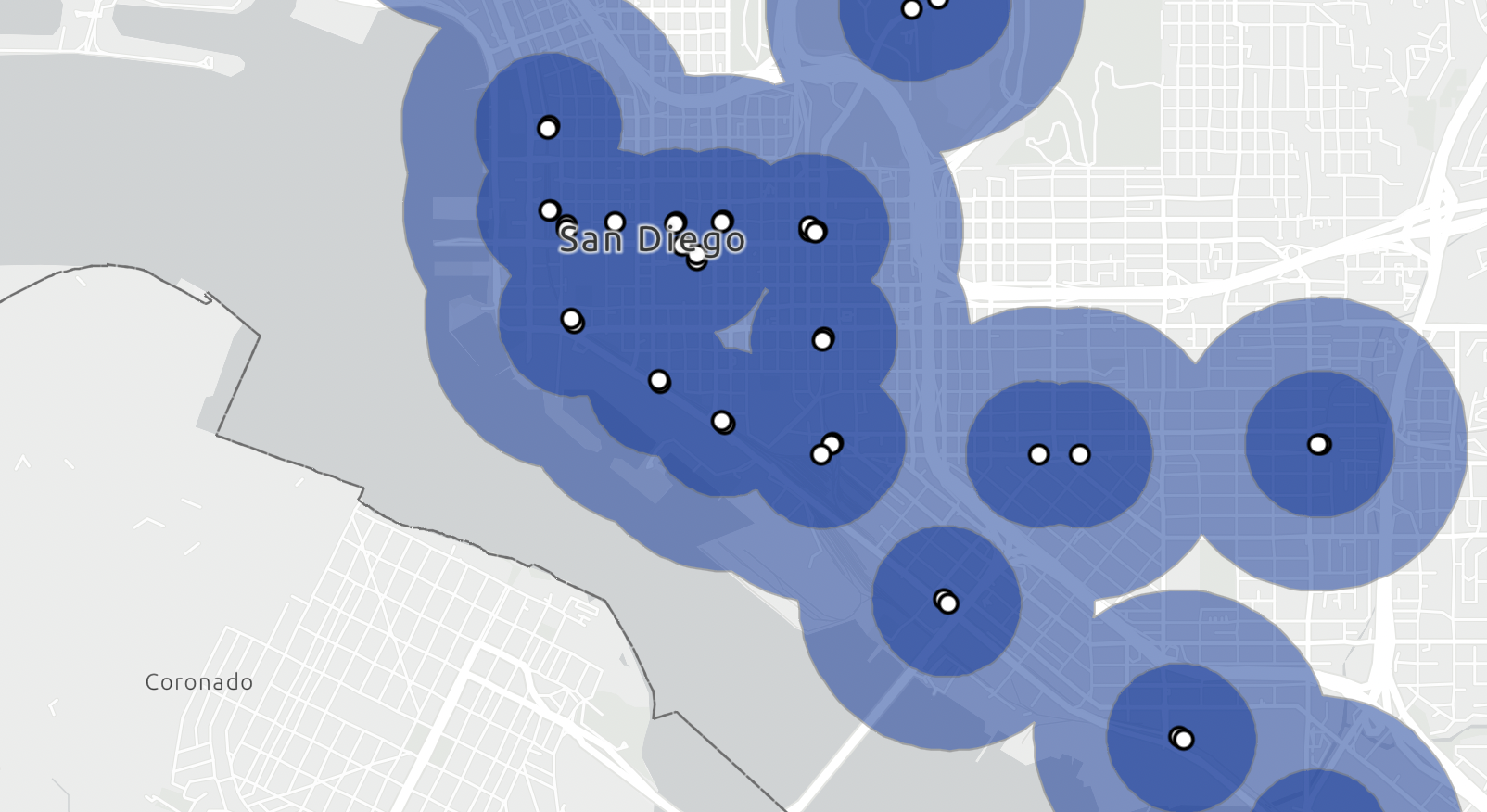
The SANDAG map identifies regional qualifying transit stops and TOD zones. It is useful for understanding where SB 79 may apply across the region.
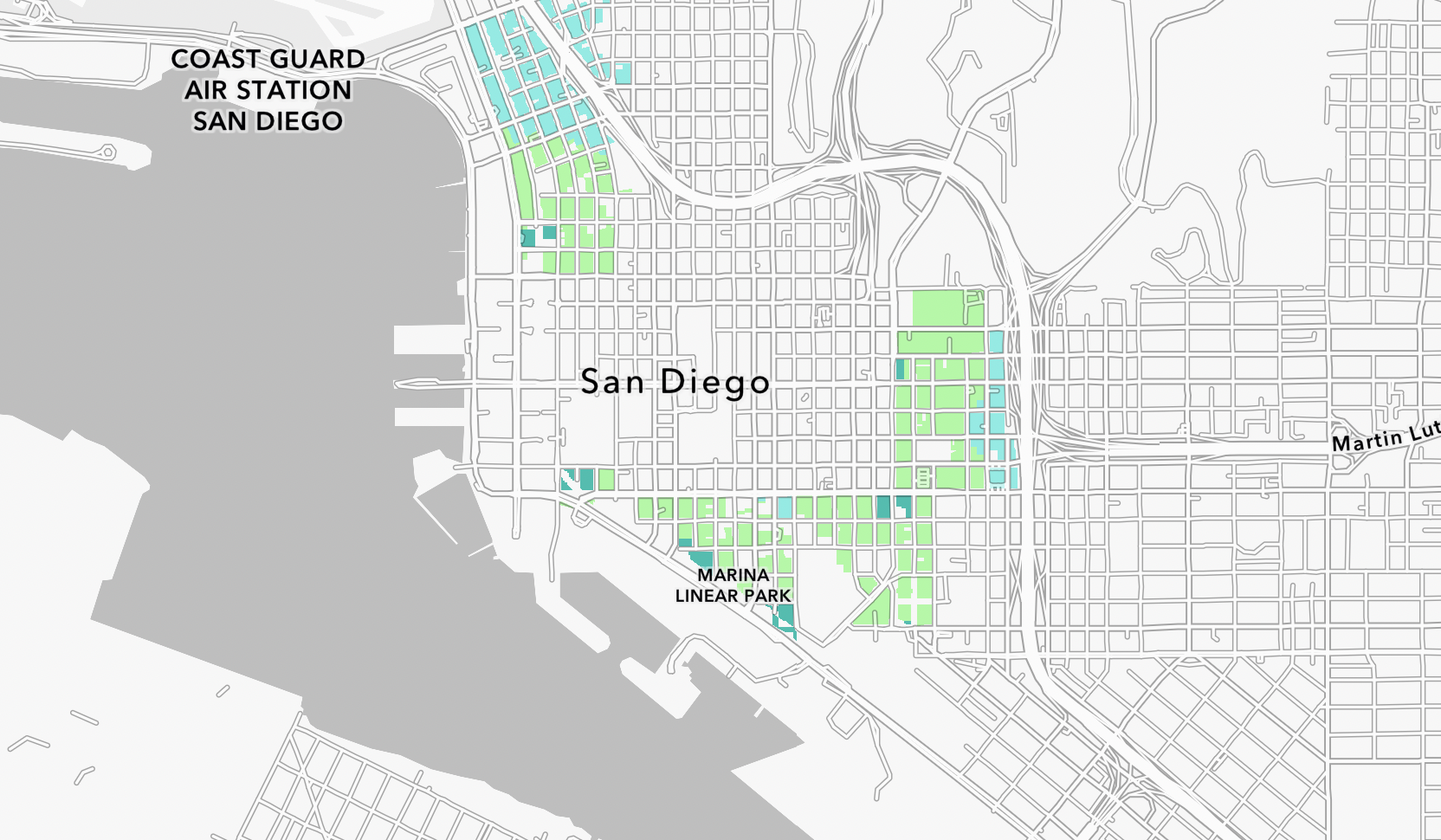
The City of San Diego ZAPP portal is the parcel-level tool. This is what investors should use to check whether a specific San Diego property is currently being treated as eligible by the City.
That means a property may appear near a SANDAG transit zone, but still not show up as eligible in ZAPP.
For underwriting, the safer approach is:
- SANDAG = regional guidance
- ZAPP = parcel-level San Diego review
If the maps do not match, the owner should ask the City directly whether the APN qualifies.
How to Use ZAPP to Check a Property
For any San Diego multifamily property, start by searching the address or APN in the City’s ZAPP map. (Quick Link to the portal with SB 79 Overlay selected: LINK TO ZAPP)
Then review:
- SB79 Eligible Sites layer
If the parcel is not shaded, do not rely on SB 79 unless the City confirms eligibility. - SB79 Major Transit Stops layer
Helps identify nearby qualifying transit stops, but does not guarantee parcel eligibility. - Base zoning
Confirms the underlying zone and what is allowed before using incentive programs. - Community plan land use / density
Helps determine the baseline unit potential. - TPA / SDA status
Important for ADUs, parking, and other development incentives. - Complete Communities Housing Solutions
Some properties may have a better development path through Complete Communities than SB 79. - Overlay constraints
Historic, airport, fire, flood, CPIOZ, coastal, and environmental overlays can all affect feasibility.
What Investors Should Look For
The strongest SB 79 opportunities are typically properties with:
- Older improvements
- Low existing building value
- Larger lots
- Transit proximity
- Clear ZAPP eligibility
- Limited historic or environmental constraints
- Weak current income compared to land value
- A realistic path to new construction rents
Not every eligible property should be redeveloped. A well-performing apartment building with strong income may be worth more as an existing asset than as a redevelopment pl
SB 79 vs. ADUs vs. Complete Communities
SB 79 is only one possible development path.
For many San Diego multifamily properties, the better strategy may be:
- ADUs / Bonus ADUs for smaller 2–4 unit properties
- Complete Communities for higher-FAR redevelopment sites
- Base zoning if the existing property already matches the allowed density
- SB 79 only if ZAPP confirms parcel eligibility and the redevelopment math works
Each property needs to be reviewed individually. The most valuable path is not always the newest law. It is the path that creates the highest realistic value with the least execution risk.
How the Process Should Work
A smart investor should verify SB 79 in this order:
- Search the APN in ZAPP.
- Turn on the SB79 Eligible Sites layer.
- Confirm whether the parcel is actually shaded.
- Review zoning, community plan density, TPA/SDA, and overlays.
- Compare SB 79 against ADU and Complete Communities options.
- Run preliminary unit-count and FAR math.
- Have an architect or land-use consultant complete a test fit.
- Ask the City for written confirmation before relying on the unit count.
If SANDAG shows a nearby TOD zone but ZAPP does not show the parcel as eligible, ask the City:
“SANDAG appears to identify the nearby transit stop or TOD zone, but ZAPP does not show APN [insert APN] within the SB79 Eligible Sites layer. Can the City confirm whether this APN is eligible for SB 79, and if not, why?”
What This Means for San Diego Multifamily Real Estate
SB 79 may create new value for certain San Diego multifamily properties, especially older buildings near qualifying transit. But it is not a blanket upzone, and it should not be used as a selling point without parcel-level confirmation.
For owners, SB 79 may create more buyer interest if the property is clearly eligible and has redevelopment potential.
For investors, SB 79 can be a useful acquisition filter, but the real opportunity comes from knowing how to verify eligibility, compare development paths, and avoid paying for density that may not actually apply.