
HOW TO VALUE A MULTIFAMILY PROPERTY IN SAN DIEGO
How to Value a Multifamily Property in San Diego (2026 Guide)
This guide breaks down exactly how multifamily properties are valued in San Diego today, including:
- Cap rate methodology
- Price per unit analysis
- GRM usage
- Lender underwriting impact
- Vacancy considerations
- 2–4 unit vs 5+ unit differences
- Renovation and repositioning value
- Submarket dynamics

Valuing a multifamily property in San Diego is not the same as valuing a single-family home.
It is not based on emotion. It is not based on granite countertops. It is not based on what your neighbor sold for.
Apartment buildings are commercial income-producing assets.
Whether you own a 4-plex in North Park or a 24-unit building in La Mesa, valuation is driven by income, risk, location, financing standards, and buyer demand — not just comparable sales.
At ACI Apartments, we are a San Diego real estate brokerage specializing in multifamily investment property. We represent sellers and buyers of 2–4 unit properties and 5+ unit apartment buildings throughout San Diego County.

Multifamily Valuation Is Based on Income
At its core, multifamily value is derived from Net Operating Income (NOI).
Unlike residential property, where buyers often focus on comparable home sales, multifamily buyers focus on income stability and yield. A building generating stronger income relative to price will command higher demand.
In San Diego’s current market, buyers are underwriting more conservatively than during the 2021–2022 cycle. Cap rates have normalized, and lenders are stricter.
NOI is calculated as:
- Gross Scheduled Income
- Vacancy
- Operating Expenses
- Net Operating Income
That means NOI accuracy matters more than ever. Inflated income assumptions lead to failed escrows. Clean, verifiable income supports pricing.

Understanding Cap Rates in San Diego
A cap rate (capitalization rate) represents the relationship between income and value.
Value = NOI ÷ Cap Rate
In simple terms:
Higher NOI = Higher value
Lower cap rate = Higher value
San Diego multifamily cap rates have moved from the historic lows of 2022 and stabilized near the high-4% range for many assets.
Cap rates vary by:
- Submarket
- Asset quality
- Unit mix
- Renovation level
- Vacancy profile
- Buyer pool
- Direct investor communication
A renovated building in North Park will not trade at the same cap rate as an older building in East County. This is why zip-code-level data matters. Using the wrong cap rate can misprice a property by hundreds of thousands of dollars.
Price Per Unit – When It Matters (And When It Doesn’t)

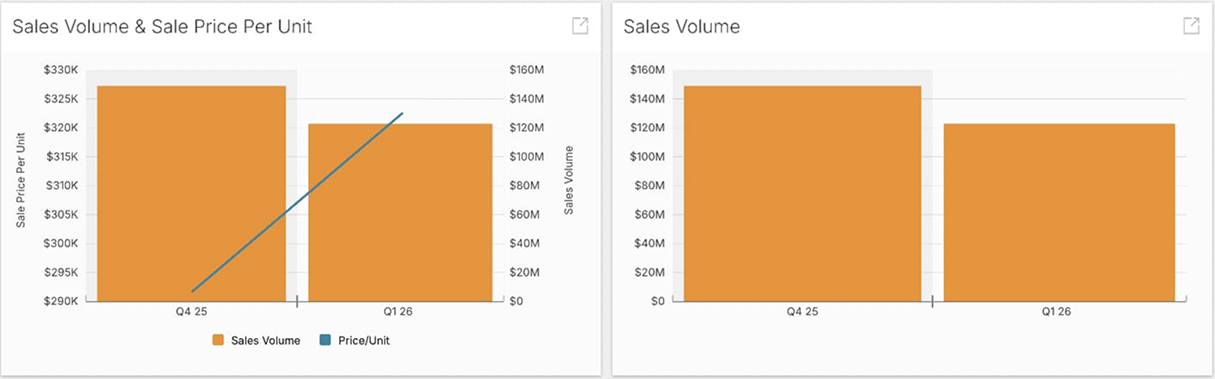
Price per unit (PPU) is one of the most commonly cited valuation metrics in San Diego multifamily
It is calculated as:
- Sale Price ÷ Number of Units
While helpful for comparison, price per unit alone does not determine value

Two 10-unit buildings in the same neighborhood can have dramatically different values if:
- One has updated interiors
- One has parking
- One has higher rents
- One has higher rents
- One has regulatory compliance issues
PPU is best used as a sanity check, not a primary valuation driver. Serious investors focus on income and risk first.
GRM – Gross Rent Multiplier
GRM (Gross Rent Multiplier) is another shorthand metric often used in San Diego.
GRM (Gross Rent Multiplier) is another shorthand metric often used in San Diego.
It does not account for expenses.
Because operating costs vary significantly across properties, GRM should never be used in isolation.
For example:
A building with low expenses may justify a stronger GRM.
A building with high maintenance or management costs may not.
GRM can help frame market expectations — but NOI and cap rate ultimately drive value in 5+ unit properties.
2–4 Units vs 5+ Units – A Critical Difference
This distinction is essential. 2–4 unit properties behave differently from 5+ unit buildings in San Diego.

A 4-plex in 92116 should not be valued the same way as a 12-unit in 92105. Understanding which market you’re operating in is foundational to proper pricing.
2–4 Units
- Often qualify for residential financing
- May attract owner-occupants
- FHA and VA loans possible
- Pricing influenced by entry-level investor demand
- Cap rate logic may be secondary to financing access
In this segment, emotional factors and financing availability can push pricing beyond strict commercial underwriting logic.
5+ Units
- Underwritten commercially
- Lender debt coverage ratios drive value
- NOI accuracy is critical
- Institutional and private capital buyers dominate
- Cap rate is primary valuation metric
Vacancy at Sale – How It Affects Value
Many owners assume vacancy automatically reduces value. That is not always true. Vacancy affects valuation differently depending on context.
If vacancy reflects:
- Turnover for renovation
- Units ready for rent reset
- Under-market leases expiring
However, chronic vacancy due to:
- Poor location
- Functional obsolescence
- Overpricing
- Heavy competition
It may actually represent upside.

Can reduce value. Buyers analyze vacancy to determine risk. In today’s San Diego market, realistic vacancy assumptions are built into underwriting. Overstating occupancy can derail a transaction.
Submarket Dynamics and Zip Code Valuation
San Diego multifamily does not trade uniformly. Cap rates, price per unit, and buyer demand vary dramatically by zip code. North Park and Normal Heights often trade at stronger pricing because of walkability and tenant demand.
Mission Valley and UTC are influenced by luxury supply and new construction. La Mesa and East County may trade at higher cap rates but attract yield-driven investors.
South Bay reflects cross-border employment dynamics and affordability positioning. Using county-wide averages to value a building is a mistake. Valuation must account for submarket buyer behavior.
Renovation and Value Creation
Renovation plays a significant role in San Diego multifamily valuation.
Value-add opportunities include:
- Interior upgrades
- Parking improvements
- Balcony compliance (SB 721)
- Electrical updates
- Roof replacement
- Laundry modernization
However, renovation cost must be weighed against achievable rent growth.
Over-improving a property beyond submarket ceilings can reduce return on capital.
Disciplined value creation increases NOI. Emotional renovation does not.


Lender Underwriting – The Hidden Force Behind Value
In today’s San Diego multifamily market, lenders influence value more than ever.
Commercial lenders do not rely on emotional pricing or aggressive projections. They evaluate:
- Verified income
- Operating expense ratios
- Debt Coverage Ratio (DCR)
- Vacancy assumptions
- Borrower strength
Most lenders require a minimum Debt Coverage Ratio of 1.20–1.30.
DCR = NOI ÷ Annual Debt Service
If a property cannot support that threshold, financing becomes difficult — regardless of asking price. This is why pricing a 12-unit building based solely on comparable sales can lead to extended marketing times or failed escrows. If a lender will not support the valuation, the market will not either. Proper multifamily valuation in San Diego must account for lender-supported value, not just theoretical market value.
Expense Verification – Where Deals Fall Apart
Income gets attention.
Expenses determine credibility.
Buyers today scrutinize:
- Property taxes (especially post-sale reassessment)
- Insurance increases
- Water and utility costs
- Deferred maintenance
- Management expenses
A seller presenting artificially low expenses can inflate NOI — but that rarely survives escrow. Experienced multifamily buyers normalize expenses during underwriting. If actual expense ratios are understated, buyer pricing adjusts accordingly. Clean books produce clean escrows.


How Properties Get Mispriced
Many multifamily properties in San Diego sit on market not because demand is weak — but because pricing is misaligned with underwriting standards.
Common mispricing errors include:
- Using peak-2022 cap rates in 2026
- Ignoring interest rate changes
- Relying solely on price per unit averages
- Failing to adjust for vacancy
- Overestimating renovation upside
- Ignoring lender debt coverage requirements
Final sale price often lands below where disciplined pricing would have begun. Multifamily valuation requires calibration — not optimism.
When pricing exceeds lender-supported thresholds, marketing timelines stretch. Price reductions follow.
ACI’s Investment Summary Approach
At ACI Apartments, we do not rely on a single valuation method. We structure two investment summaries for each listing:

1. Market Ask Model – Based on comparable transactions, cap rate trends, and submarket demand.
2. Lender Finance Model – Based on realistic debt coverage, interest rate environment, and conservative underwriting.
Where those two models overlap is where pricing discipline lives.
This approach reduces:
- Extended days on market
- Buyer pushback
- Renegotiations during escrow
- Failed financing contingencies
In today’s market, alignment with lender underwriting is not optional. It is foundational.
When to Sell vs When to Hold
Valuation is not just about what a property is worth. It is about strategy.
Owners should consider selling when:
- Equity has accumulated significantly
- Renovation upside has been realized
- Regulatory compliance is complete
- A 1031 exchange could improve unit mix or location
- Cap rate compression has maximized value
Owners may consider holding when:
- Long-term fixed debt is favorable
- Rent roll remains below market
- Submarket supply pressure is temporary
- Long-term appreciation remains compelling
The decision should be data-driven — not reactive.


1031 Exchange Strategy in San Diego Multifamily
The average cap rate across recent sales is 4.9%
San Diego Multifamily Market Report (2026)

Many San Diego owners hold properties for decades. Over time, appreciation and rent growth create substantial equity. Valuation becomes critical when planning a 1031 exchange.
Understanding your true market value allows you to:
- Trade into stronger submarkets
- Upgrade unit mix
- Move from 2–4 units into 5+ units
- Improve compliance profile
- Increase long-term durability
Exchange decisions require accurate pricing. Overpricing can derail timelines. Underpricing can leave equity on the table.
Strategic repositioning often occurs during normalization cycles — not peak frenzy cycles.
Cap Rate vs Appreciation – A Long-Term Perspective
Investors often debate yield versus appreciation.
San Diego multifamily historically benefits from:
- Limited land
- Strong tenant demand
- Diverse employment base
- Institutional interest
While cap rates fluctuate with interest rates, long-term appreciation has been supported by structural constraints.
Valuation should balance:
- Current income performance
- Submarket durability
- Renovation potential
- Long-term appreciation trajectory
Yield alone does not define value in a supply-constrained market like San Diego.
Common Questions About Multifamily Valuation
How do I know what cap rate applies to my building?
Does vacancy automatically reduce value?
Not always. If vacancy reflects rent reset opportunity or renovation turnover, it may represent upside. Chronic vacancy due to poor positioning can reduce value.
Should I renovate before selling?
Is price per unit a reliable metric?
How do interest rates impact value?
Is 2026 a good time to sell?
Is 2026 a good time to buy?
Disciplined markets often provide better entry points than overheated cycles. Buyers face less competition and can underwrite more conservatively.
The Bottom Line
Multifamily valuation in San Diego is not guesswork. It is not based on headlines. It is not based on what a neighbor thinks the market is doing.
It is driven by:
- Income
- Risk
- Submarket demand
- Lender standards
- Buyer behavior
Apartment buildings are commercial assets.
2–4 units behave differently from 5+ unit properties. Buyer pools differ. Financing differs. Marketing platforms differ. A general residential agent may list an apartment building. A multifamily specialist creates competition.
Want a Data-Backed Multifamily Valuation?
If you own a multifamily property in San Diego and want a confidential, realistic valuation based on:
- Zip-code-level transaction data
- Cap rate trends
- Lender underwriting models
- Renovation analysis
- Buyer demand calibration
We’re happy to provide one.
Use our Property Valuation Tool to begin.

Many San Diego owners hold properties for decades. Over time, appreciation and rent growth create substantial equity. Valuation becomes critical when planning a 1031 exchange.