
San Diego - CA USA MULTIFAMILY MARKET REPORT (2026)
San Diego Multifamily Market Report – 2026 Update
We’ll walk through:
- Vacancy
- Rent growth
- Cap rates
- Sales volume
- Price per unit trends
- Construction supply
- What it means for owners
- What it means for buyers
Not everyone loves data.
At ACI Apartments, we take the opposite approach.
Max, our Chief Operating Officer, studies this market daily. For him, the numbers paint a picture before the headlines do. If you do not have someone on your team watching vacancy trends, cap rate movement, supply pipelines, and underwriting behavior, you fall behind — quietly.
This page is not meant to overwhelm you.
It is meant to clarify what is actually happening in San Diego multifamily right now.
San Diego is not a secondary or tertiary multifamily market.
It is considered a core West Coast investment market alongside Los Angeles, the Bay Area, and Seattle. Institutional capital continues to target San Diego because of its diversified employment base, geographic constraints, and long-term population stability.
Even in periods of elevated vacancy or slower rent growth, capital has not exited the region. Large institutional buyers continue to deploy capital in both suburban and downtown assets, reflecting long-term confidence in the region’s fundamentals .
San Diego Multifamily Market Report (2026)
What makes San Diego different from many Sunbelt markets is land constraint. Unlike Phoenix, Dallas, or Austin, San Diego cannot sprawl indefinitely. Ocean to the west. Mexico to the south. Camp Pendleton to the north. Mountains to the east.
Supply cycles may fluctuate, but long-term constraints remain intact

San Diego Multifamily Snapshot (Past 12 Months)
Those numbers alone tell an important story.
The market is not frozen. Transactions are closing. Capital is still active. But underwriting has become disciplined.
The days of “list high and see what happens” are largely gone.
Pricing and positioning matter again.
Over the past 12 months, San Diego multifamily has recorded:
- 308 closed transactions
- Average price per unit: $362,097
- Average cap rate: 4.9%
- Average vacancy at sale: 8.8%
- Average time to sell: 5.6 months

Vacancy – What the Headlines Don’t Explain
Current San Diego multifamily vacancy sits at 6.1%
San Diego Multifamily Market Report
That is the highest level in over a decade.
On the surface, that sounds alarming.
But context matters.
San Diego delivered 6,100 new apartment units last year — the highest level in 25 years
San Diego Multifamily Market Re…
An additional 7,900 units are currently under construction
San Diego Multifamily Market Report (2026)
That level of supply naturally pressures occupancy.
However, most of this new supply is concentrated in 4- and 5-Star luxury product. Vacancy in that category has climbed to 12%
San Diego Multifamily Market Re…
Older, well-located 2- and 3-Star inventory has not experienced the same degree of stress.
Luxury supply is absorbing slower.
Workforce housing remains structurally undersupplied.
This distinction is critical when evaluating risk.
Vacancy at Sale vs Market Vacancy

Average vacancy at sale is 8.8%
San Diego Multifamily Market Report (2026)
Vacancy at sale often reflects:
- Units undergoing renovation
- Owners who have not adjusted rents to current market levels
- Operational repositioning
- Leasing strategy timing
In fact, vacancy at sale can sometimes improve marketability

Many owners interpret that number as weakness.
It is not automatically weakness.
Vacant units allow:
- Easier property showings
- Buyers to project pro forma rents
- Avoidance of deeply under-market leases that suppress valuation
- Leasing strategy timing
In today’s underwriting environment, mispricing hurts more than vacancy
An accurately priced property with vacancy can outperform an overpriced, fully occupied building.
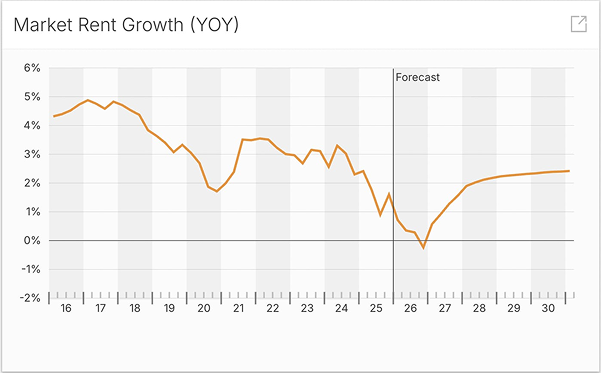
Rent Growth – The Reset Phase
Twelve-month asking rent growth is currently -0.2%
San Diego Multifamily Market Re…
This follows a period of extraordinary rent growth in 2021 and 2022.
During that time:
- Demand surged
- Interest rates were historically low
- Investors underwrote aggressive rent growth assumptions
That pace was not sustainable indefinitely.
San Diego’s long-term rent growth benchmark sits closer to 3% annually
San Diego Multifamily Market Report (2026)
Operators have openly acknowledged using concessions to “buy occupancy”
San Diego Multifamily Market Re…
The current environment is normalization — not collapse.
Normalization forces operators to:
- Maintain properties
- Renovate dated units
- Improve tenant experience
- Price realistically
Long-term, that strengthens the market.
Construction Pipeline – Short-Term Pressure, Long-Term Context
San Diego delivered 6,100 units last year, the highest annual delivery volume in 25 years
San Diego Multifamily Market Report (2026)

Currently, 7,900 units remain under construction
San Diego Multifamily Market Report (2026)
This surge explains:
- Elevated vacancy
- Concessions
- Slower rent growth
However, construction costs remain historically high. Interest rates are elevated relative to 2021–2022 levels. Financing for new projects is more restrictive.
That means the current pipeline may represent a peak.
New starts have already slowed significantly compared to prior years.
The implication?
Supply pressure is cyclical. Long-term constraint remains structural.
Submarket Variations – Why Zip Code Matters
San Diego multifamily is not a single market.
It is a collection of micro-markets with very different behaviors.
Luxury-heavy areas like Mission Valley, UTC, and Downtown have absorbed most new construction. These submarkets have experienced the greatest vacancy expansion
. Meanwhile, stabilized 1970s–1990s product in neighborhoods like North Park, Normal Heights, La Mesa, and South Bay has behaved differently. These areas continue to benefit from strong tenant demand and limited new supply.
This is why relying solely on county-wide averages can mislead owners.
At ACI, valuation does not stop at county metrics. We analyze zip code-level transaction data, unit mix trends, and buyer demand patterns before pricing.

The difference between 92116 and 92105 is not theoretical. It is measurable
Star Ratings and Asset Quality
The market report distinguishes between asset classes and star ratings.
Luxury 4 & 5 Star vacancy has climbed to approximately 12%
San Diego Multifamily Market Report (2026)
This reflects:
- Heavy delivery concentration
- Elevated asking rents
- Concession competition
Meanwhile, older 2–3 Star inventory — often workforce housing — has experienced more stable occupancy. Investors evaluating opportunity must understand where the vacancy risk is concentrated. Not all vacancy is equal
Interest Rates and Cap Rate Spread
One of the most misunderstood elements of today’s market is the relationship between interest rates and cap rates.
In 2021 and 2022, interest rates were historically low. Cap rates compressed aggressively because financing was cheap and investor demand was extreme.
Today, average cap rates hover around 4.8–4.9%
San Diego Multifamily Market Report (2026)
Buyers must:
- Focus on operational upside
- Underwrite realistic rent growth
- Control renovation budgets
- Accept longer hold periods
Interest rates, meanwhile, are moderately above that level for most commercial debt.
This creates a narrower spread between borrowing cost and yield.
That does not eliminate transactions. It changes underwriting discipline.
The market has shifted from appreciation-driven returns to operational-driven returns.
That is healthier long term.


Price Per Unit Over Time – A Historical View
Looking at historical pricing trends:
- 2021 average price per unit: $303,557 San Diego Multifamily Market Report (2026)
- 2022 average price per unit: $398,002 San Diego Multifamily Market Report (2026)
- 2023 average price per unit: $370,351 San Diego Multifamily Market Report (2026)
- 2024 average price per unit: $391,279 San Diego Multifamily Market Report (2026)
- 2025 average price per unit: $358,075 San Diego Multifamily Market Report (2026)
Notice something important:
Prices have not collapsed.
They have fluctuated within a disciplined range.
The narrative of “multifamily is crashing” is not supported by transaction data.
Behavioral Shifts – Buyers and Sellers
Sellers must recalibrate expectations formed during peak years.
Buyers must recalibrate rent growth expectations formed during 2021–2022.
The market is not broken.
It is adjusting.
The most successful owners in this environment are those who:
- Maintain properties
- Upgrade interiors
- Improve tenant quality
- Price realistically
- Adapt to new construction competition
The most successful buyers are those who:
- Underwrite conservatively
- Avoid aggressive rent assumptions
- Focus on operational efficiency
- Understand submarket dynamics

Turnover and Time on Market
The average time since sale is 5.6 months
San Diego Multifamily Market Report (2026)
That is longer than 2021, but not abnormal historically
Longer marketing times reflect:
- More underwriting scrutiny
- More lender involvement
- More selective buyers
Properties priced without regard to lender constraints tend to sit longest. This is why we model pricing not just on comparables, but on lender-supported value.
That reduces:
- Price reductions
- Failed escrows
- Extended days on market
Regulatory Overlay – Why Local Knowledge Matters
A market report without regulatory context is incomplete. Multifamily investing in San Diego requires both financial and regulatory literacy.
San Diego multifamily is not just about rent and vacancy.

It is shaped by:
- SB 721 balcony compliance
- AB 1482 rent control
- Tenant buyout regulations
- Defensible space requirements
These regulations influence:
- Buyer risk assessment
- Seller obligations
- Valuation adjustments
- Renovation budgets
Long-Term Outlook
San Diego multifamily is not just about rent and vacancy.
San Diego’s economy remains anchored by:
- Defense spending
- Biotech and life sciences
- Tech employment
- Tourism
- Cross-border commerce
The region continues to attract institutional capital.
Short-term supply pressure does not eliminate long-term demand drivers.
Markets that normalize are stronger than markets that remain overheated.


Cap Rates – Back to Historical Discipline
The average cap rate across recent sales is 4.9%
San Diego Multifamily Market Report (2026)

Looking back:
- 2021: 4.1% San Diego Multifamily Market Report (2026)
- 2022: 3.5% San Diego Multifamily Market Report (2026)
- 2023: 4.4% San Diego Multifamily Market Report (2026)
- 2024: 4.6% San Diego Multifamily Market Report (2026)
- 2025: 4.8% San Diego Multifamily Market Report (2026)
Cap rates compressed during ultra-low interest rate cycles.
They have since expanded and stabilized.
Importantly, San Diego remains a core institutional market. Large investors continue to view the region favorably due to life science, defense, and tech demand drivers
San Diego Multifamily Market Report (2026)
Cap rates today reflect rational pricing — not distress.
Price Per Unit – Where We Stand
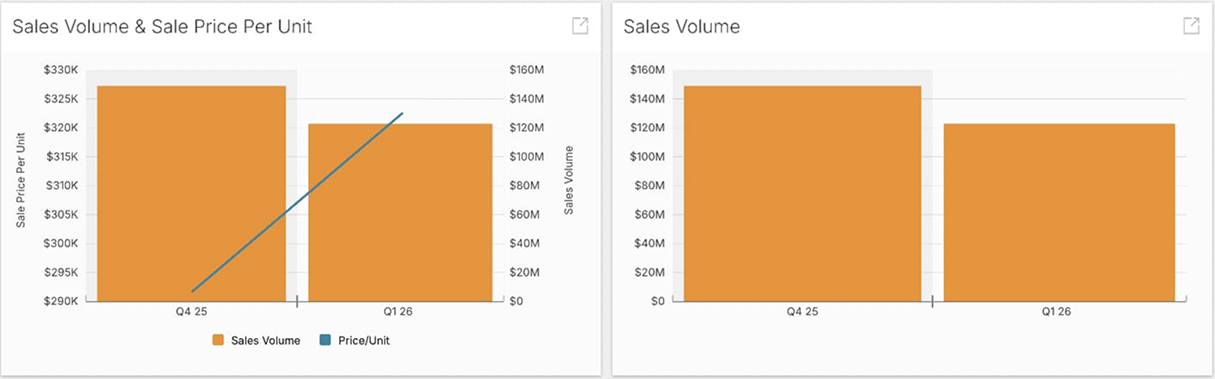
Average price per unit over the past 12 months is $362,097
San Diego Multifamily Market Report (2026)
That number spans:
- 5-unit buildings
- 20-unit neighborhood assets
- 300+ unit institutional properties
Price per unit varies dramatically by:
- Submarket
- Vintage
- Renovation level
- Unit mix
- Vacancy profile
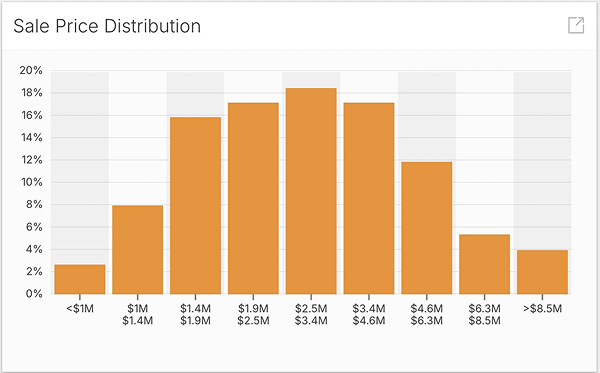
Coastal and core submarkets typically trade at lower cap rates and higher price per unit.
Suburban or older assets may trade at higher cap rates and lower per-unit pricing.
This is why zip code dynamics matter more than broad county averages.
Average price per unit over the past 12 months is $362,097
San Diego Multifamily Market Report (2026)
Sales Volume – The Frenzy Is Gone
Transaction volume peaked in 2021 at $5.6B
San Diego Multifamily Market Report (2026)
It has moderated since:
- 2022: $3.8B San Diego Multifamily Market Report (2026)
- 2023: $2.3B San Diego Multifamily Market Report (2026)
- 2024: $3.3B San Diego Multifamily Market Report (2026)
- 2025: $2.4B San Diego Multifamily Market Report (2026)
The bidding-war environment of 2021 is gone.
What remains is a stable, functioning market where well-priced assets trade.
This is healthier long term.

What This Means for Sellers
Sellers today must:
- Price based on lender-supported underwriting
- Anticipate buyer sensitivity to vacancy
- Be transparent about expenses
- Understand cap rate movement
- Market directly to qualified investor pools
The market-wide average time to sell is 5.6 months
San Diego Multifamily Market Report (2026)
Proper positioning can outperform that.
Proper positioning can outperform that.
Buyers today benefit from:
- Less competition than 2021
- More realistic underwriting
- Negotiation leverage
- Ability to underwrite renovation upside
Buying during disciplined cycles often produces stronger long-term returns than buying during frenzy cycles.
Final Perspective
San Diego remains:
- Geographically constrained
- Economically diverse
- Institutionally desirable
If you are an owner:
You should understand your building’s current income relative to market rent.
You should understand where your submarket sits within the supply cycle.
You should understand how lenders will underwrite your asset.
San Diego multifamily is not collapsing.
It is recalibrating.
That is where disciplined investors thrive.
Short-term supply pressure does not erase long-term fundamentals.
The difference in 2026 is precision.
Owners who understand the data make better decisions.
Investors who underwrite conservatively outperform.
If you are a buyer:
You should focus on quality locations.
You should underwrite conservative rent growth.
You should prioritize operational upside over speculative appreciation.
FAQs – San Diego Multifamily Market
Is the San Diego multifamily market declining?
No. It is normalizing after an overheated rent and transaction cycle. Sales are still closing, cap rates have stabilized, and institutional capital remains active.
Are cap rates expected to rise significantly?
Cap rates have already expanded from 2021 lows and are currently stabilizing near 4.8–4.9%.
Major expansion would likely require significant interest rate shifts.
Does higher vacancy mean falling prices?
Is now a good time to sell?
Is now a good time to buy?
Disclaimer
Last Updated: 03/07/2026
This market report was prepared March 1, 2026 using ACI Apartments’ in-market experience, discussions with lending and title partners, and data sourced from CoStar and other industry reporting tools. While every effort has been made to present accurate information, ACI Apartments does not guarantee the completeness or reliability of all data presented. Market conditions, financing environments, and regulations change frequently, and this report should be used for informational purposes only. This report will be updated periodically throughout the year as new market data becomes available.